
Why golden orchard montessori school?
We know parents have choices when it comes to their children’s education. We know these choices are not easy. Why do so many families choose Montessori?
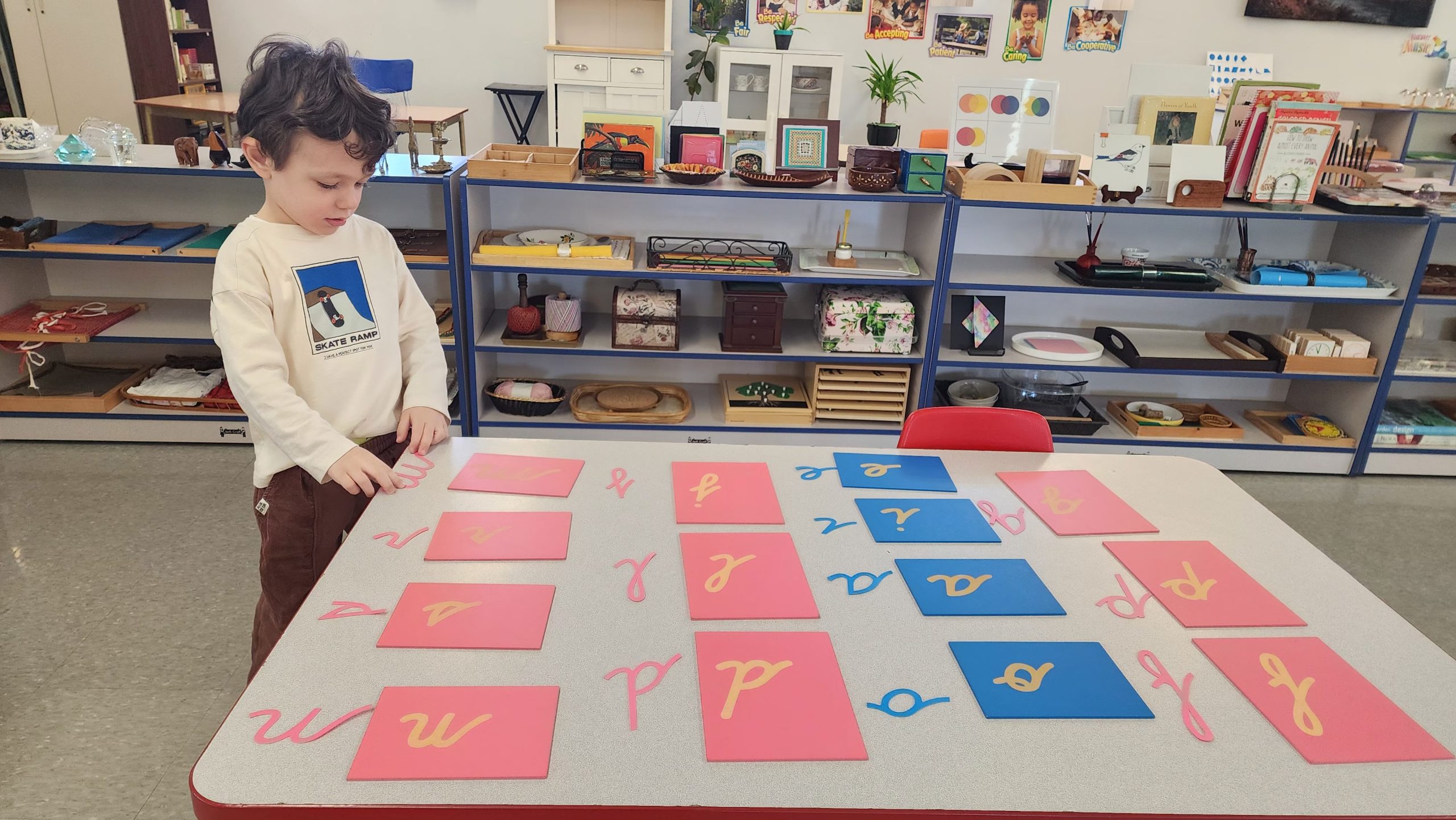
Montessori meets children where they are, without judgment.
Montessori schools are specifically designed to allow each child to move at their own pace. We know that learning is not linear and that children are not ready to learn specific skills according to an adult-prepared timeline or in perfect harmony with their peers. Kids who need more support with specific skills get that support, and those ready to move ahead can find the challenges they crave.
We do not teach a whole class of children the same skill simultaneously; that may seem more efficient from an adult’s perspective, but it’s not necessarily what best serves the children. No two people should be expected to grow at the same rate, and it’s our job as educators to meet children where they are and give them the support they need to get where they want to be.
Our school cultivates community.
A Montessori school is more than just a school. First and foremost, we are there for our students, but we believe schools have the capacity to be so much more. We aim to make meaningful connections between everyone involved. Some of the ways we do this include:
- Giving our guides opportunities to connect for development
- Encouraging our guides to form connections within the more extensive Montessori network
- Making sure parents and guides have ample time to discuss the child’s growth and needs
- Providing opportunities for parents to form relationships with one another
- Supporting families via parent education offerings
- Gathering as a whole school periodically
- Forming bonds between children at different levels
- Reaching out to make connections with the local
- We also believe it is our job to take the guesswork out of making these We aim to build structures that make it simple for everyone to find commonalities and open communication streams seamlessly.
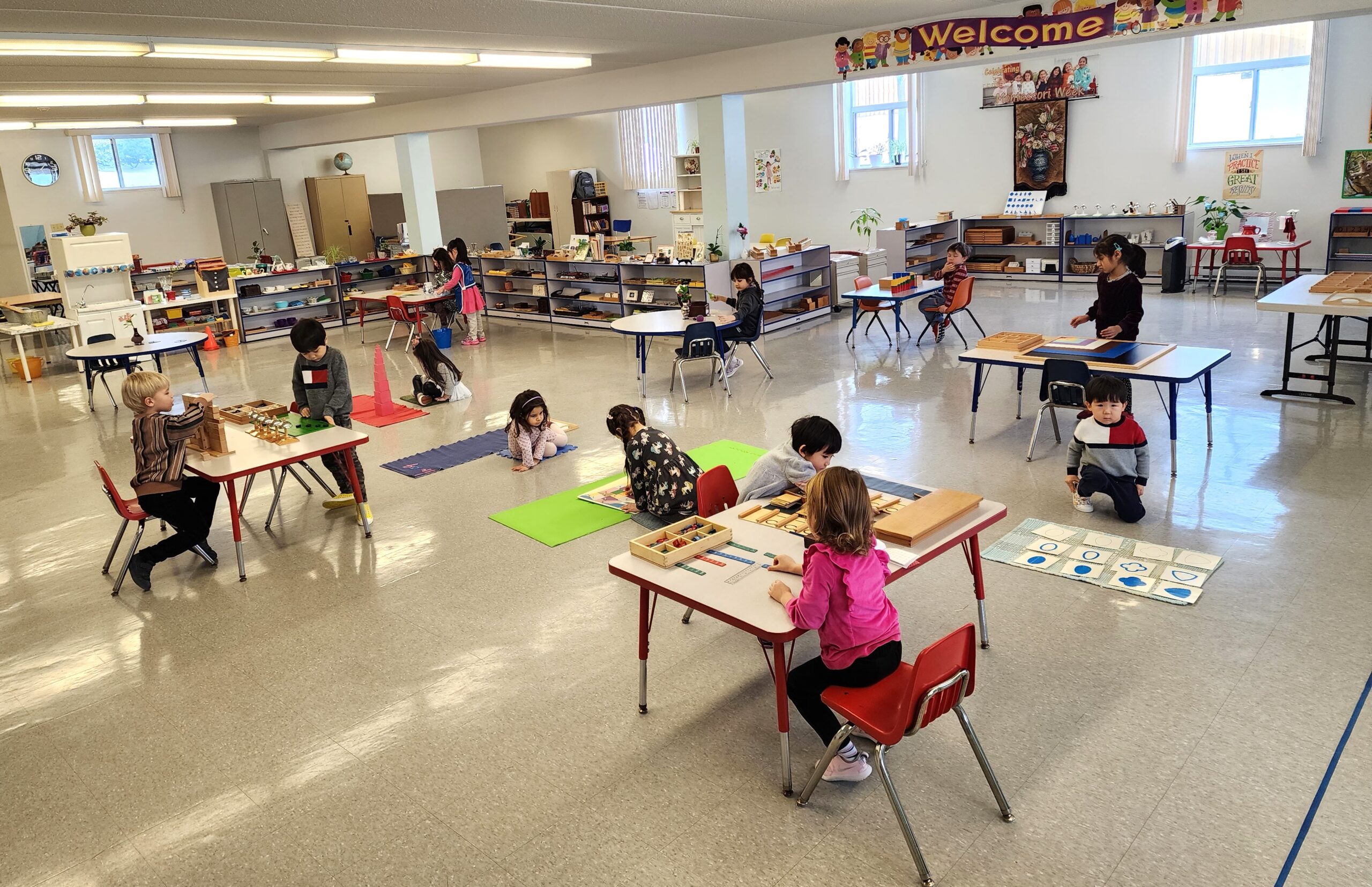
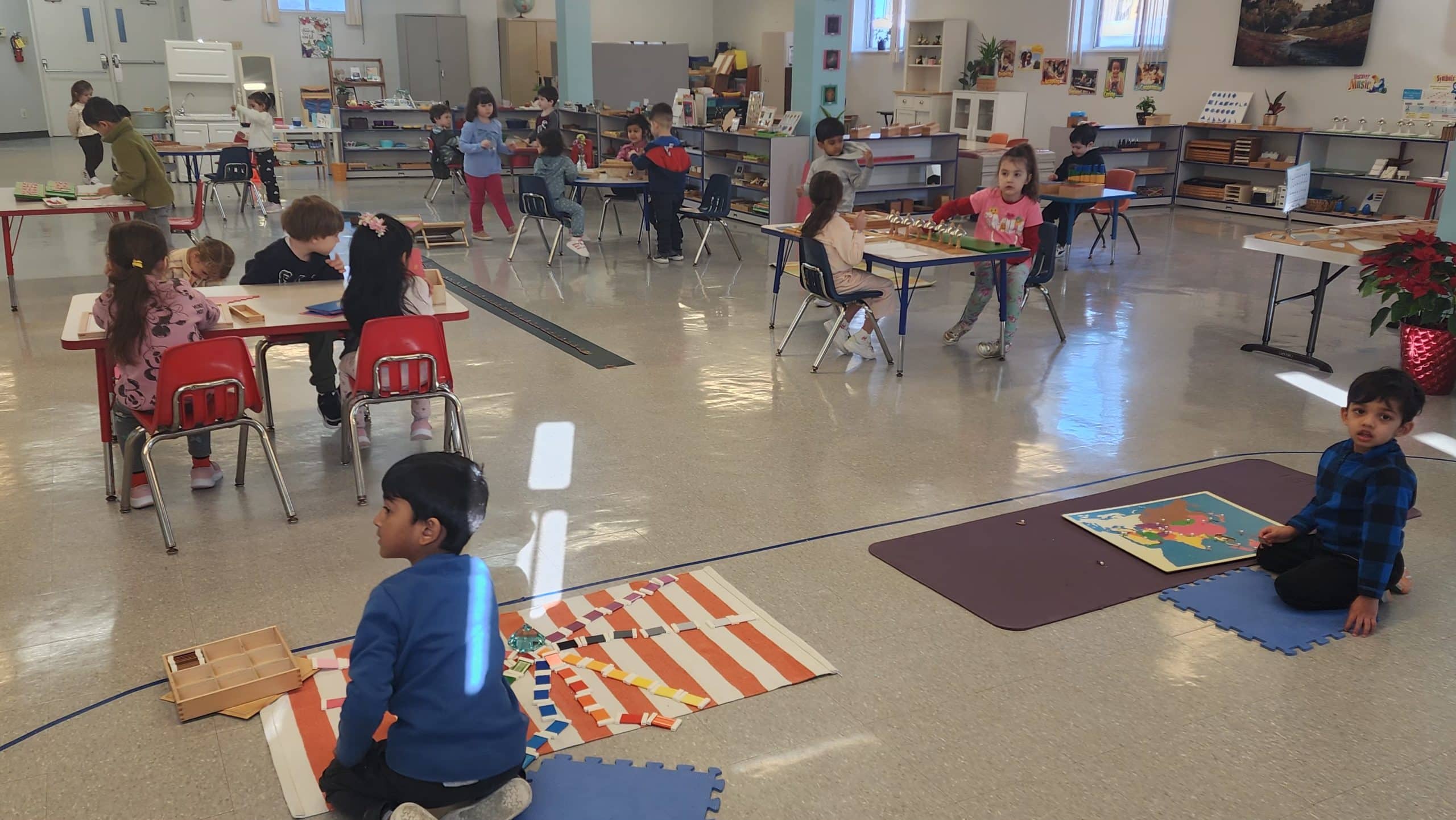
Montessori emphasizes more than just academics…
Lots of people use the phrase ‘teaching to the whole child’, but in Montessori schools, we mean that on a profound level. We do not teach just to convey academic information. In fact, academics share equal emphasis with our efforts to develop other aspects of the child, including emotional, social, sensorial, and practical life development. We integrate the arts and movement into everything our children do rather than isolating these areas of study into separate classes. We intentionally teach children how to navigate and resolve conflict and adhere to grace and courtesy social norms.
Our most significant task is, we believe, to give children a global view of the world. We want them to understand the interconnectedness of all things so that they may be fully integrated members of their greater community as they grow and mature.
…but academics are a huge strength
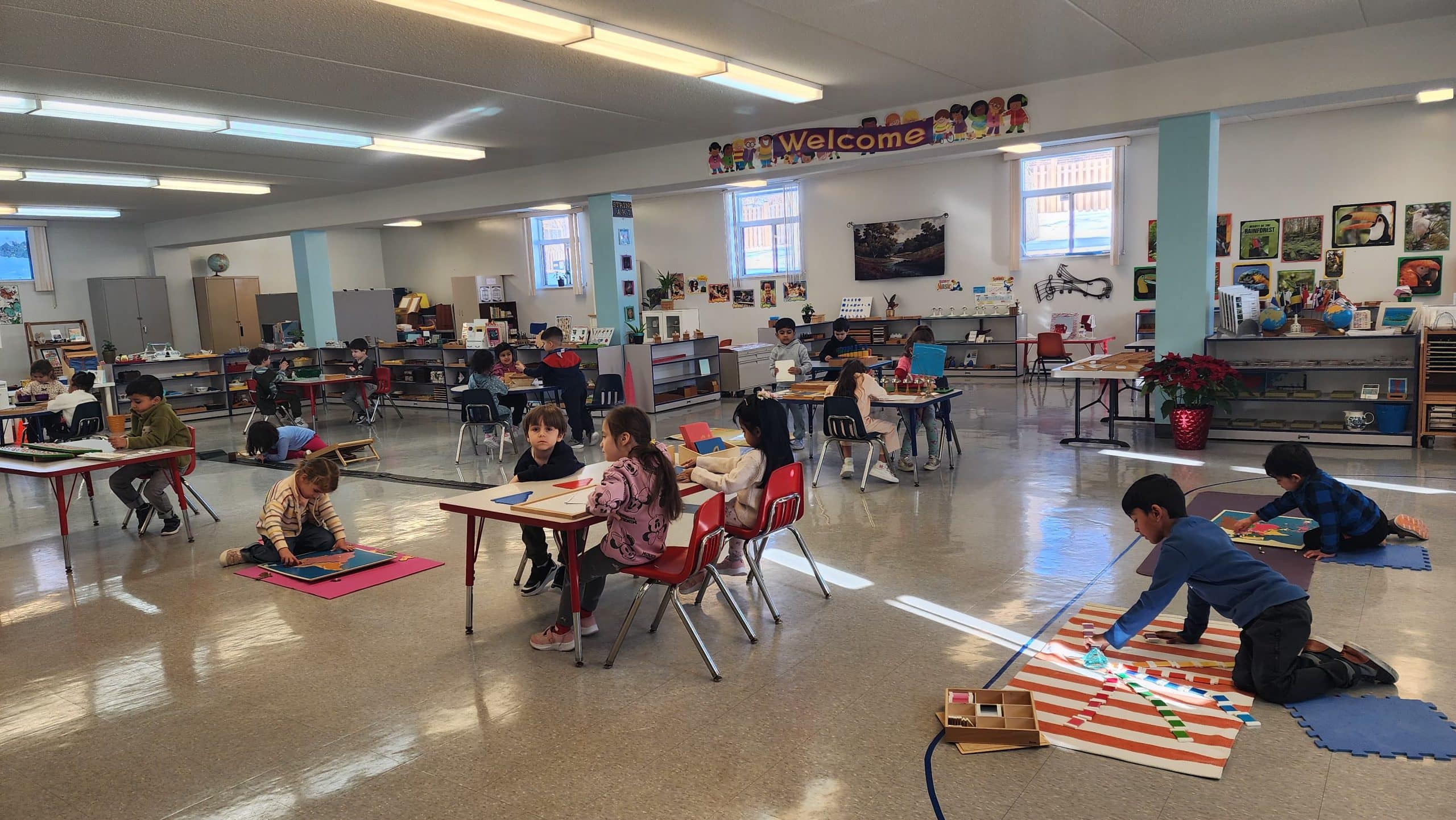
As mentioned above, Montessori academics are often hailed as having some of the highest standards. It is not uncommon to see four-year-olds in our schools reading and six-year-olds completing long division problems. These tasks are completed joyfully, in part because we present information in such a way that children discover it for themselves rather than passively taking in facts given by an adult.
Another reason Montessori students seem to work at an advanced academic level is because of what we call sensitive periods. Through years of observation, Dr. Maria Montessori noticed that young children seemed primed and, particularly interested and ready to develop certain skills during very specific time periods. While, of course, there is variation between individual children, she noticed some general patterns that have helped us develop our curriculum. One exciting example is the study of geometry. Many of us were first exposed to the subject during our high school years when it turns out that primary- and elementary-aged children are not only interested in geometry but have a great capacity to learn far more than we typically give them credit for. This is why you may hear your five-year-old talking about rectangular prisms or your six-year-old discussing the differences between isosceles, right, and scalene triangles.
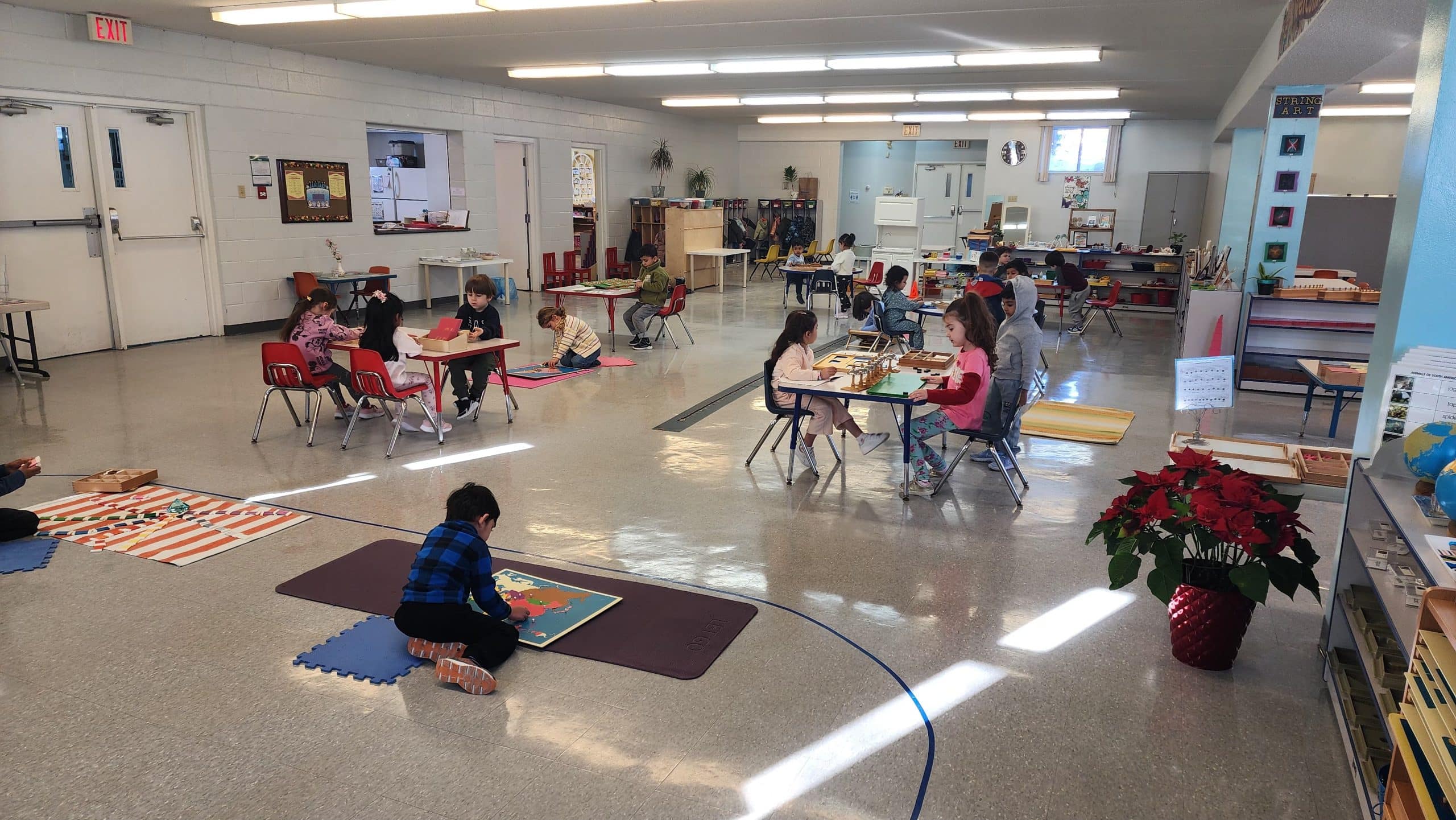
Montessori aims to lift up humanity
This is quite a lofty goal. From the beginning, Dr. Montessori saw it as her mission to improve the world through education. She believed that by giving children the honor and respect they deserved, the benefits would trickle through to families, the community, and society in general. She believed
in the equality of all people and saw that education has the potential to be a great leveler.
Montessori schools aim for peace. This starts between individuals and teaches our youngest students how to be kind and gracious toward one another. A great respect for the environment and other living beings is another vital aspect of our work, as is a reverence for the vast diversity of cultures around the globe. Combined, these elements are meant to cultivate within the child a respect for themselves and others and a desire to ensure connection and fairness for all.
“This is education for our rapidly changing world.
This is education for the future.
This is education for life.”